Why Brass and Copper Fixtures Outlast Everything Else in Oregon
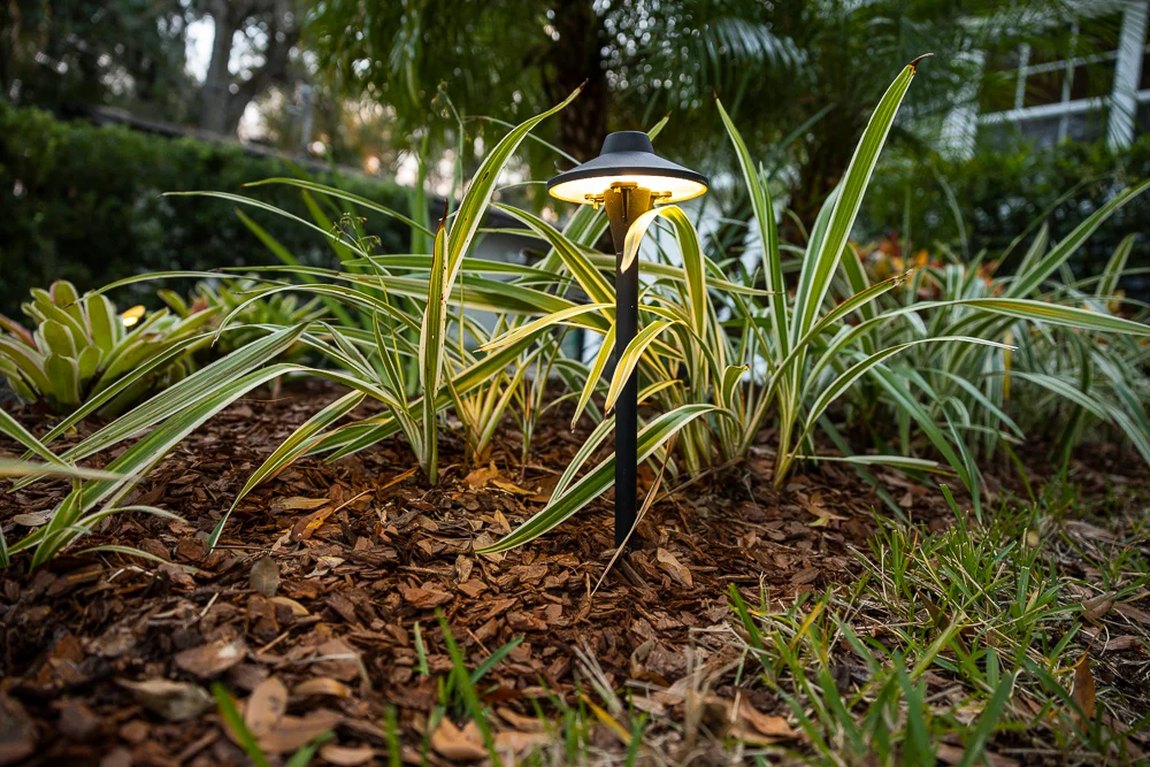
Two lighting systems installed the same week can look completely different five years later. The variable is almost always fixture material — and in a climate as wet as ours, it's the specification that decides whether you're enjoying your lighting in a decade or replacing it in three years.
What Our Climate Actually Does to Fixtures
Portland averages around 155 days of measurable rain a year. Soil stays saturated for months. Moss grows on everything that holds still. Temperatures cycle around freezing repeatedly through winter. Every one of those is an attack on a buried or ground-mounted fixture, and water intrusion is the mechanism behind nearly every failure we're called out to diagnose.
Composite and Plastic
The cheapest option, and the one sold in most big-box kits. Plastic becomes brittle under UV exposure and cracks at the stem — usually where the fixture meets the ground stake, and usually after a couple of freeze-thaw cycles. Once it cracks, water gets in, and the fixture is finished. Expect a few seasons.
Cast Aluminum
A real step up, and common in mid-tier systems. The problem is galvanic corrosion: aluminum sitting in wet soil, in contact with dissimilar metals, corrodes from the base up. Powder coating delays it, but the coating chips, and corrosion starts at the chip. Expect several years to a decade depending on soil contact.
Solid Brass and Copper
Brass and copper don't rust. They oxidize into a stable patina — brass darkening to a deep bronze, copper moving through brown toward verdigris — and that surface layer protects the metal underneath rather than eating into it. It's the same reason copper roofs and brass marine hardware last generations in punishing conditions. A quality brass landscape fixture will outlive the plantings around it, which is why reputable manufacturers put lifetime warranties on them and why we specify them on essentially every project.
The Part Nobody Mentions: Connectors
Fixture material gets the attention, but the most common single failure point in landscape lighting is the wire connection. Twist-on wire caps buried in wet Oregon soil corrode and fail — reliably. Waterproof silicone-filled connectors cost a little more and simply don't. When you're comparing quotes, ask what connectors are being used. It tells you a great deal about the rest of the install.
The Real Math
A brass system costs more up front and less over its life, because you buy it once. Contact PDX Outdoor Lighting and we will show you the fixtures we install, in hand.
PDX Outdoor Lighting
Portland's outdoor lighting specialists — custom low-voltage landscape lighting design, installation, and service for homes and businesses across the Portland, Oregon metro area.
Planning a lighting repair & maintenance project?
Get a free design consultation from the Portland area's outdoor lighting specialists.