Low-Voltage vs. Solar vs. Line-Voltage Outdoor Lighting
If you're deciding how to light your yard, you're really choosing between three systems. They're not equivalent, and the differences matter more in the Pacific Northwest than almost anywhere else.
Solar
Solar path lights are cheap, need no wiring, and are genuinely tempting. They also depend entirely on charging — and Portland gets roughly 155 sunny days a year, with December averaging under three hours of daily sunshine. Solar fixtures are dimmest exactly when nights are longest and you need them most, and the small batteries typically degrade within a couple of years. They're fine as a temporary marker along a path. They aren't a lighting system.
Line-Voltage (120V)
Standard household-voltage outdoor lighting is bright and appropriate for certain commercial applications, tall pole lighting, and some floods. For residential landscape lighting it's a poor fit: it requires conduit, permitting, and licensed electrical work; it's inflexible once installed, since moving a fixture means real excavation; and buried 120-volt cable is genuinely dangerous to garden around.
Low-Voltage (12V)
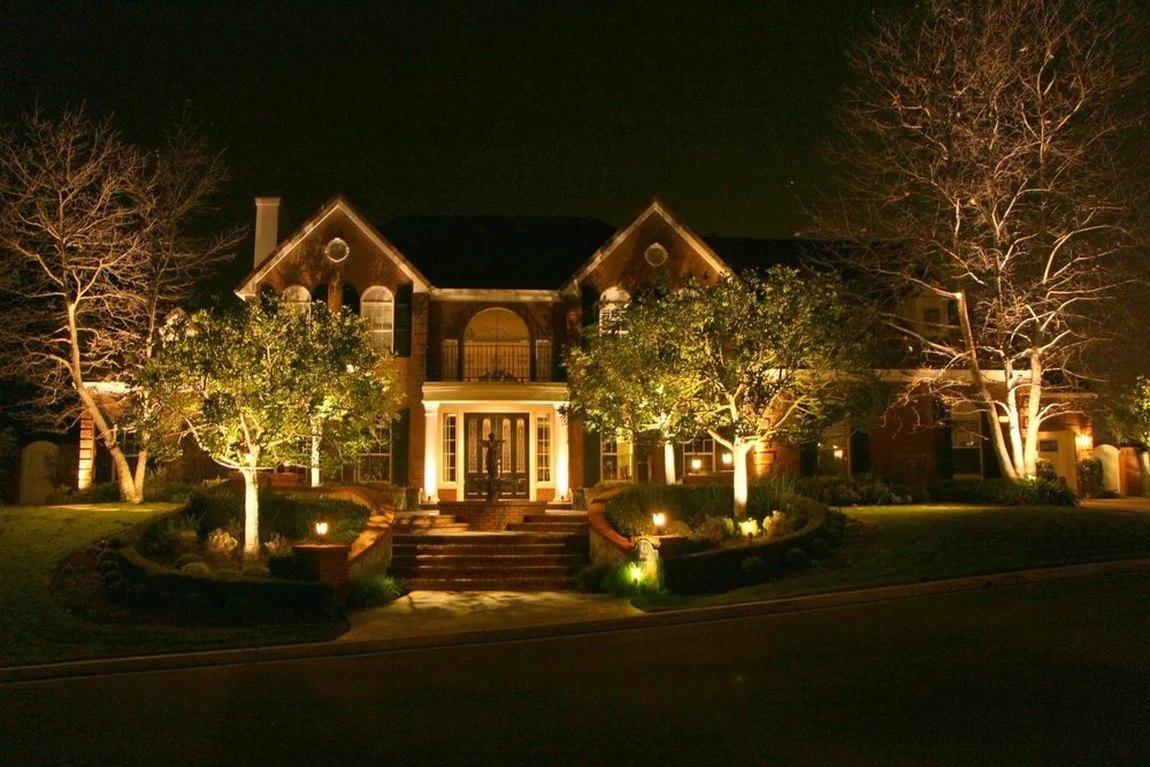
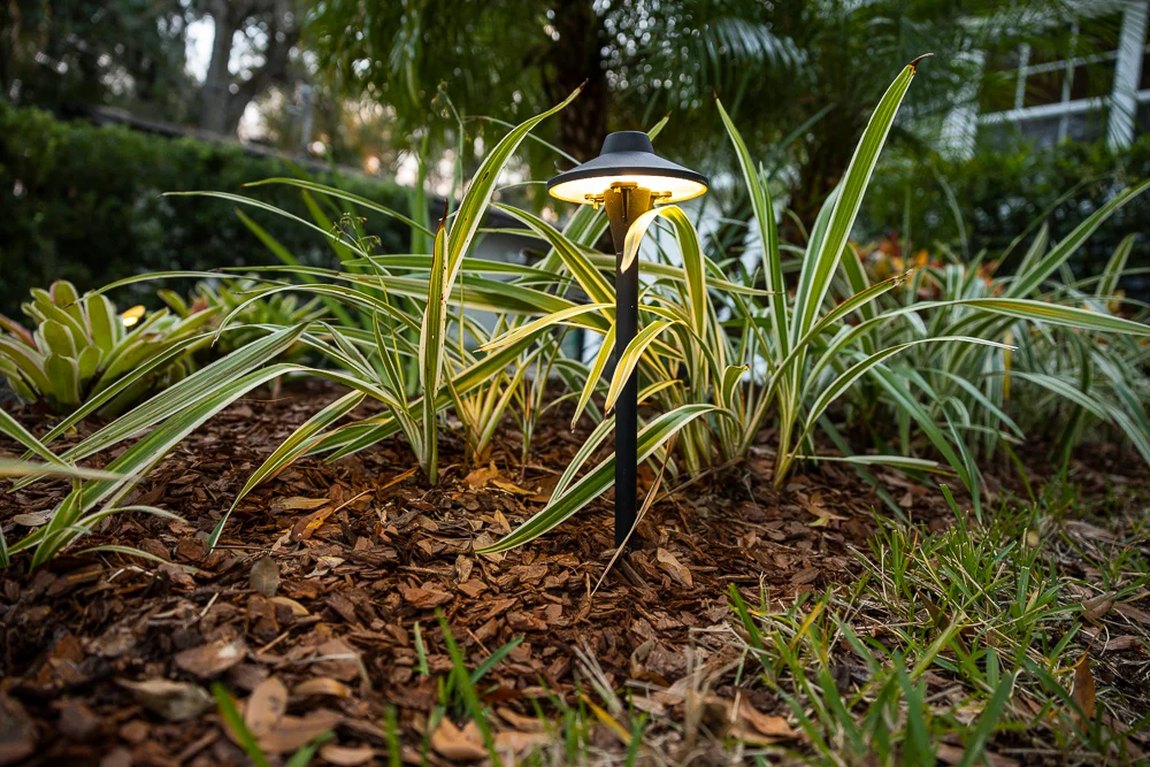
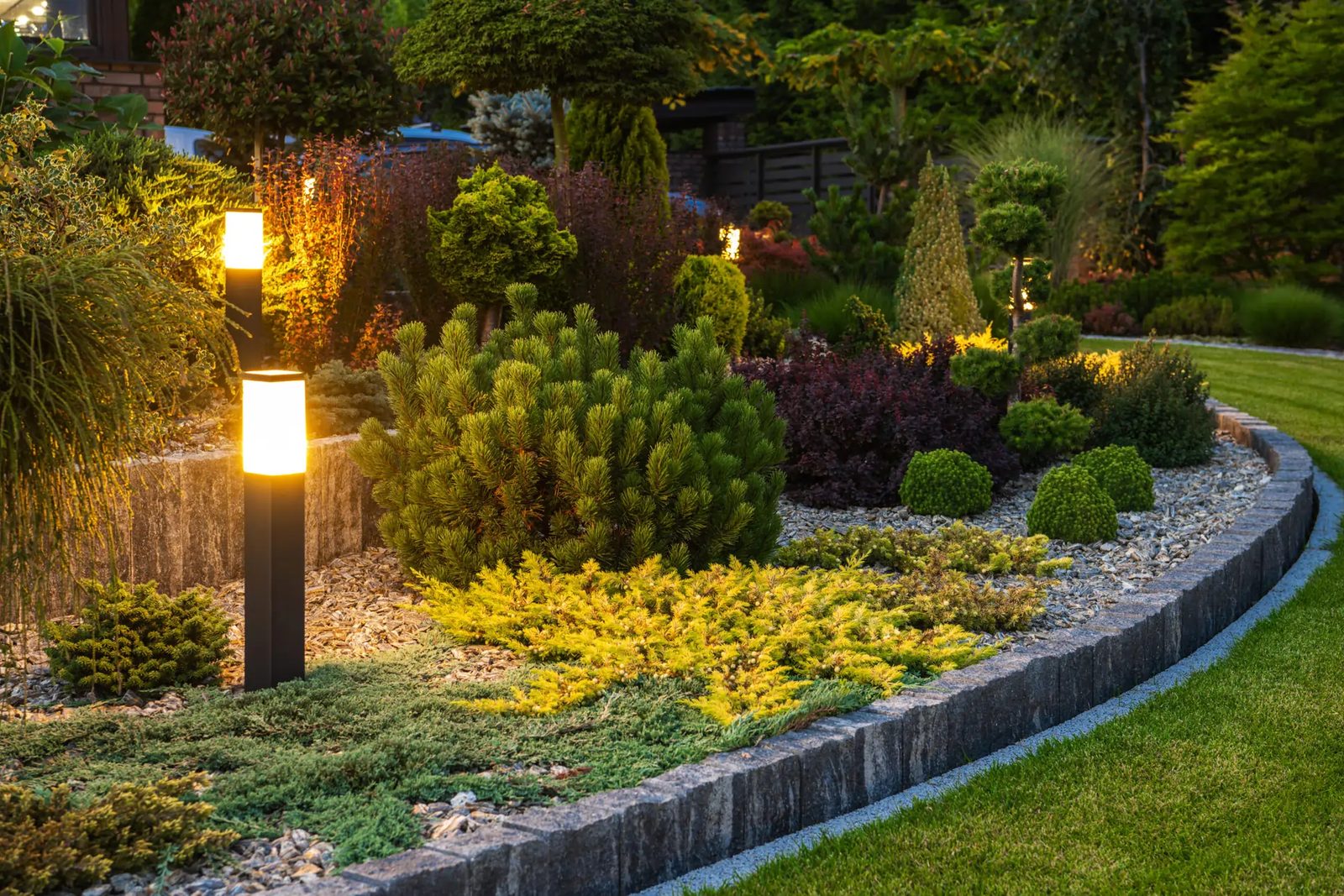
This is the residential standard for good reason. A transformer steps household current down to 12 volts at one location, and everything past it is low-risk cable that can be hand-tucked shallow, routed around root zones, and rerouted later without drama. Fixtures can be moved and added as plantings mature. Modern low-voltage LEDs produce plenty of output for landscape work, and the whole system typically draws less power than a couple of old incandescent bulbs.
What Actually Separates Them in Oregon
Weather. Eight months of rain, saturated soil, moss, and freeze-thaw cycling will find every weak point in a system. Professionally installed low-voltage lighting handles it because the components are chosen for it — wet-location-rated brass and copper fixtures, waterproof silicone-filled connectors instead of twist caps, and transformers with proper drainage. Solar fixtures and big-box kits use none of that, which is why they're dark by year three.
The Practical Verdict
For essentially every residential property in the Portland metro, professionally installed low-voltage lighting is the right answer — safer than line-voltage, dramatically more reliable than solar, and flexible enough to grow with your landscape. Contact PDX Outdoor Lighting for a free consultation.
PDX Outdoor Lighting
Portland's outdoor lighting specialists — custom low-voltage landscape lighting design, installation, and service for homes and businesses across the Portland, Oregon metro area.
Planning a lighting repair & maintenance project?
Get a free design consultation from the Portland area's outdoor lighting specialists.