Uplighting, Downlighting & Grazing: A Guide to Lighting Techniques
Outdoor lighting design isn't about buying better fixtures — it's about knowing where to put them and why. Here are the core techniques, and what each one is actually for.
Uplighting
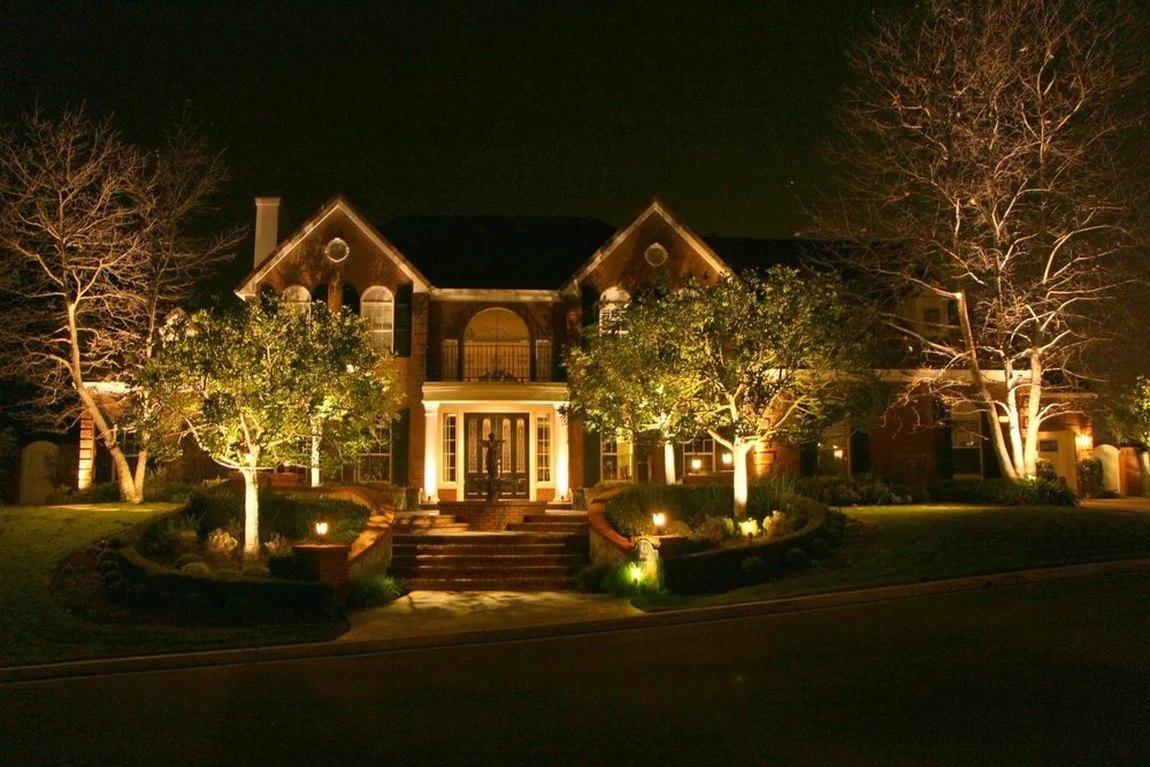
A fixture at ground level aimed up at a tree, wall, or architectural feature. It's the most-used technique in landscape lighting because it creates drama and height that nothing at ground level can. The key is cross-lighting: two or three fixtures aimed from different angles produce a three-dimensional form, where a single head-on fixture flattens the subject into a silhouette.
Downlighting and Moonlighting
Fixtures mounted high — in a tree, a pergola beam, or under an eave — aimed down. Light filters through branches and structure and lands as soft, dappled shadow. It's the most natural-looking effect available, it produces almost no glare, and under one of Portland's big firs or maples it's genuinely striking.
Grazing
Placing a fixture close to a textured surface so light rakes across it at a shallow angle. Every joint and stone face casts a small shadow, and the texture leaps out. Perfect for stone, brick, and rough bark — and wrong for smooth stucco or flat siding, where it just highlights every imperfection.
Washing
The opposite of grazing: a wider beam from farther back that lays even light across a surface. Right for smooth walls, fences, and hedges where you want a soft field of light rather than texture.
Silhouetting
Lighting the surface behind an object so the object reads as a dark shape against a bright field. Superb for plants with strong outlines — Japanese maples, ornamental grasses, sculptural shrubs. It's the most underused technique in residential lighting.
Shadowing
The inverse: light the object from the front so its shadow is thrown large onto the wall behind it. A branching shrub in front of a pale wall produces a shadow far more dramatic than the plant itself.
The Principle Behind All of It
Contrast is what makes lighting work. Lighting everything evenly is the same as lighting nothing — the eye needs dark to perceive light. Restraint is the technique that matters most, and it's the one that separates a designed system from a yard with fixtures in it.
See the Techniques on Your Own Property
Which of these is right depends entirely on the subject. Contact PDX Outdoor Lighting and we'll walk your property and tell you which effects your trees and walls will actually take.

PDX Outdoor Lighting
Portland's outdoor lighting specialists — custom low-voltage landscape lighting design, installation, and service for homes and businesses across the Portland, Oregon metro area.
Planning a lighting repair & maintenance project?
Get a free design consultation from the Portland area's outdoor lighting specialists.